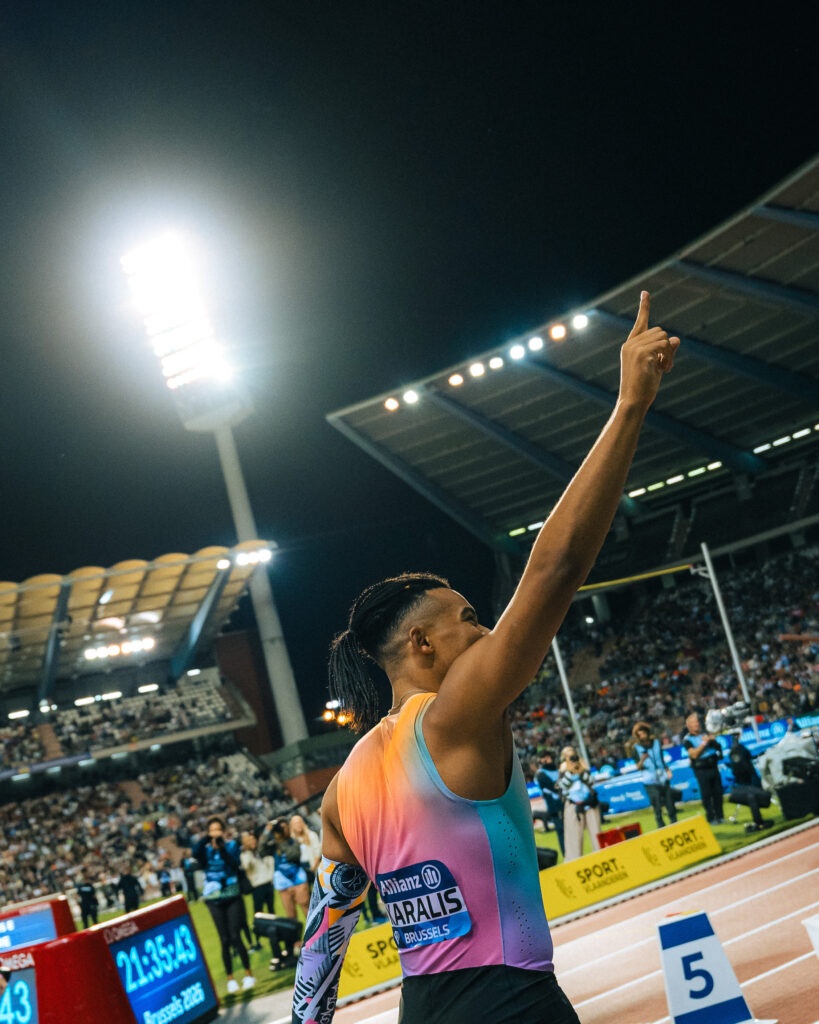




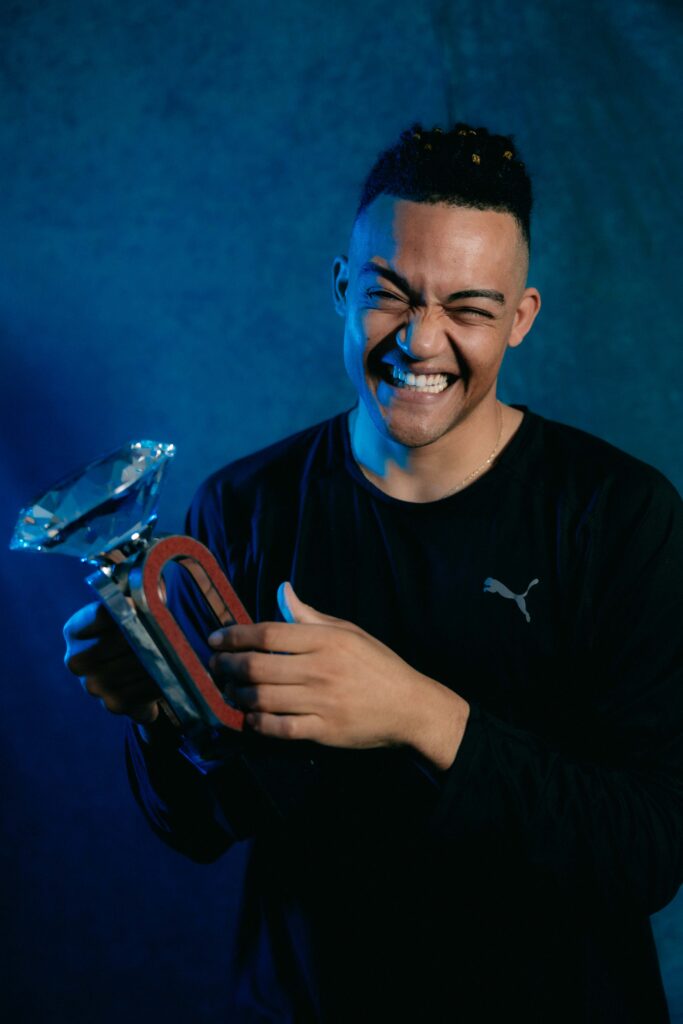
He arrived in Shanghai with a dream. He ended the season with a diamond in his hands. In between lay a journey of ambition, persistence, personal breakthroughs and the courage to believe that one day, his moment would come.
Every athlete has a dream that feels just a little too big to say out loud. For Manolo Karalis, that dream was the Diamond Trophy.
When we caught up with the Greek pole vaulter ahead of the Shanghai Diamond League, the ambition was already there. He spoke of one day winning the coveted prize, a goal that belonged to the future but was very much alive in his mind. At the time, it was a vision to chase, something to work towards amid the relentless demands of a sport in which the difference between a good performance and a great one can be measured in centimetres.
Months later, that same dream became reality.
Karalis stood at the end of the Diamond League season as its champion, having turned a wish into an achievement. The road between Shanghai and the final was about far more than a trophy, however. It was a story of chasing the very best, redefining his own limits and discovering what can happen when a distant ambition becomes a daily commitment.
Living in the shadow of greatness. And learning from it
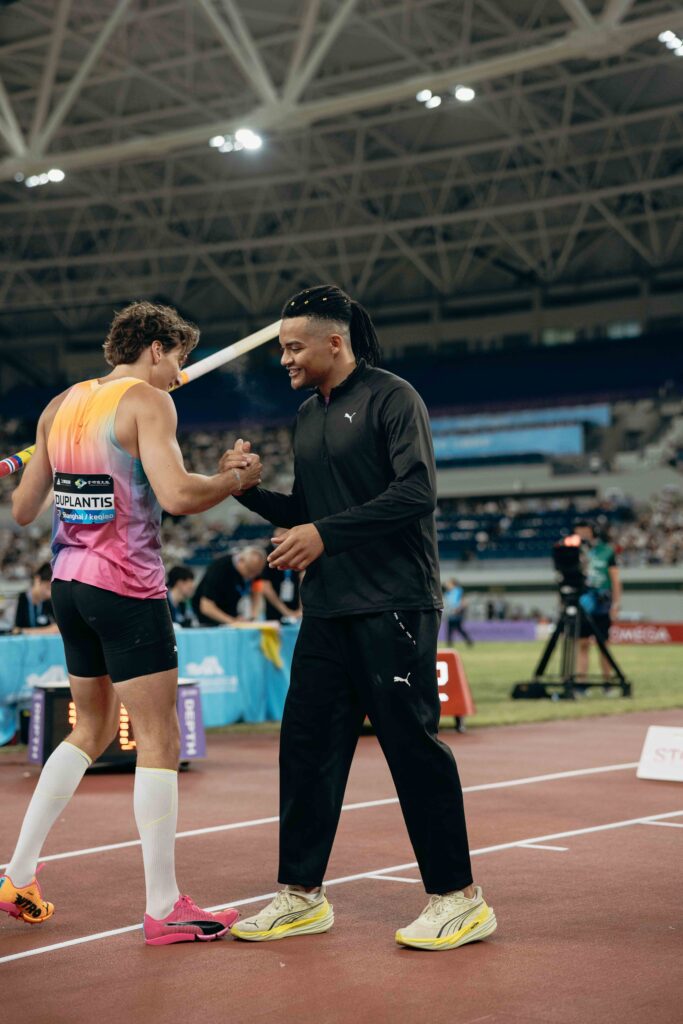
In pole vaulting, there is one name that has come to define an era: Mondo Duplantis.
The Swedish superstar has pushed the boundaries of the event to extraordinary heights, transforming world records into milestones that seem to arrive almost as soon as the previous ones have been celebrated. For everyone competing alongside him, Duplantis represents both the ultimate benchmark and a formidable challenge.
For Karalis, chasing the greatest means operating in a world where excellence is the entry requirement, not the finish line. To compete against an athlete of Duplantis’ calibre is to be constantly reminded of just how high the ceiling can be.
But there is a difference between chasing someone else’s greatness and building your own.
The real challenge is not simply to keep pace with the person standing on top of the sport. It is to find the confidence to believe that you belong in the same conversation, to turn the gap between where you are and where you want to be into a reason to improve rather than a reason to doubt.
Karalis’ journey has been shaped by that pursuit. Every competition offers another opportunity to test himself, every bar another chance to discover what is possible. The presence of a generational talent such as Duplantis raises the standard, but it also makes the challenge unmistakable: if you want to compete with the best, you have to keep becoming better yourself.
And sometimes, progress begins with the quiet decision to stop treating your biggest ambition as an impossible one.
One centimetre at a time
Pole vaulting is a sport of spectacular moments built on painstaking details.
The crowd sees the sprint down the runway, the pole bending under pressure, the explosive lift and the fleeting instant when an athlete clears the bar. What it does not always see is everything that makes that moment possible: the technical adjustments, the repetitions, the physical preparation and the mental discipline required to return to the runway after a miss.
Progress is rarely a straight line. A bar can fall. A competition can disappoint. A breakthrough can take longer than expected. The athlete must learn to separate a temporary setback from a permanent limitation.
For Karalis, breaking barriers meant continuing to test the boundaries of his own ability. It meant treating personal bests not as the end of a journey, but as evidence that another level might be within reach. Each improvement could become the foundation for the next, each new height proof that yesterday’s limit did not have to define tomorrow’s performance.
There is something particularly compelling about that process. In a sport measured so precisely, growth can be visible down to the centimetre, yet the belief required to achieve it is much harder to quantify.
The bar does not care about reputation or potential. It asks only whether an athlete can clear the height in front of him.
And so the work continues.
From a wish in Shanghai to a goal within reach
When Karalis spoke about winning the Diamond Trophy before the Shanghai Diamond League, the prize was still a future possibility. His words offered a glimpse of the ambition behind the athlete — a reminder that even at the highest level, great achievements often begin with a simple declaration of what you hope to accomplish.
Goal setting can be deceptively powerful. A dream gives direction, but a goal demands action. It asks an athlete to translate a broad ambition into the smaller, less glamorous steps that make it achievable: improving technique, building consistency, learning from difficult competitions and arriving at the next meet better prepared than the last.
The Diamond Trophy was the destination. The season was the journey.
Between those two points, Karalis had to keep his focus on what he could control. He could not dictate the performances of his rivals or guarantee how a competition would unfold. He could, however, continue to develop his own abilities and put himself in a position to take advantage when the opportunity arrived.
That distinction matters. Ambition is not a promise that everything will go to plan. It is a willingness to keep working towards a result even when the route remains uncertain.
By the time the season reached its decisive stage, the dream he had expressed months earlier was no longer merely something to imagine. It was something he had the opportunity to fight for.
And he seized it.

The moment the dream became real
Winning a Diamond League title is an achievement in its own right. Doing so after spending a season chasing improvement, setting targets and believing in a goal gives the moment an added dimension.
For Karalis, the final marked the culmination of that pursuit. The athlete who had spoken in Shanghai about one day winning the Diamond Trophy finished the season with the prize itself.
There is a satisfying symmetry to the story. The ambition was voiced before the journey had played out, before the final chapter had been written. What followed gave those words meaning.
It is tempting to look back at a season through the lens of its final result, as though the trophy had always been waiting at the end of the road. But sporting success rarely feels inevitable while it is happening. There are too many variables, too many rivals and too many moments when the outcome hangs in the balance.
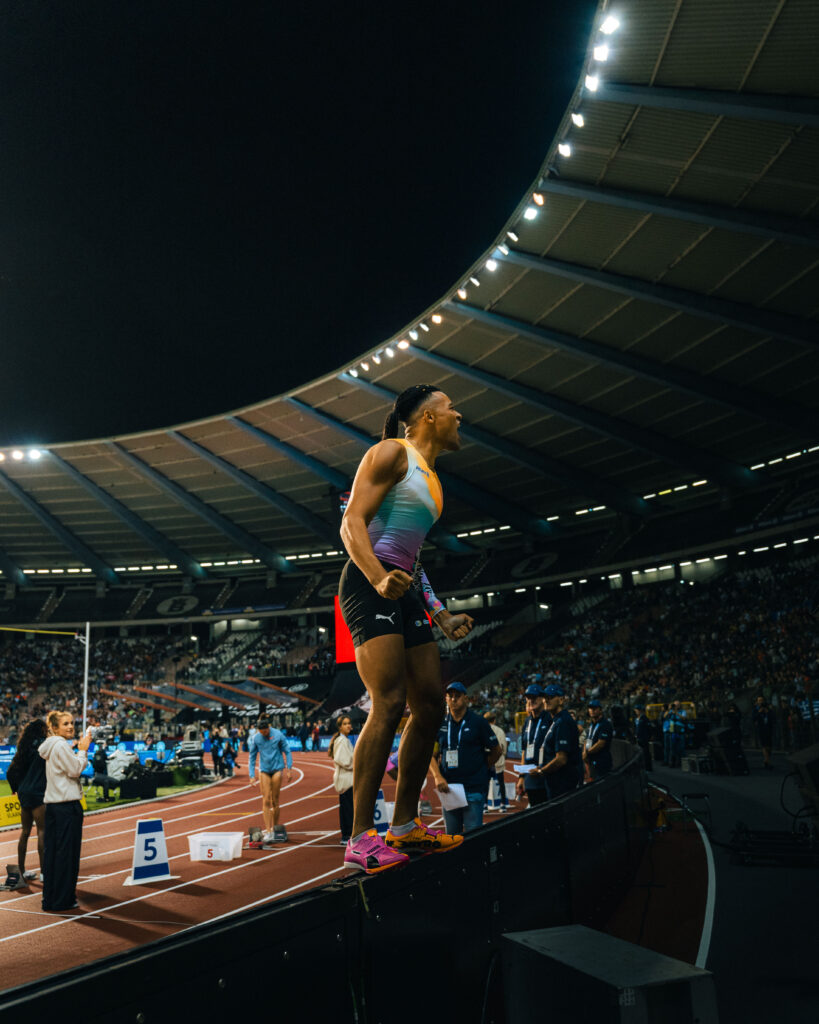
That is what makes the achievement worth celebrating. Karalis had set his sights on one of the sport’s most coveted prizes and ultimately delivered on that ambition. He did not simply dream about reaching the summit; he put himself in contention and finished the season as champion.
For an athlete whose career continues to be measured against extraordinary standards, the victory offers something valuable: a result that belongs to him, earned on the track and recorded in the history of the season.
The chase for greatness had produced a milestone of his own.
A trophy, a statement, and a new beginning
There is a tendency in elite sport to treat every victory as either a definitive arrival or a stepping stone towards something bigger. For Karalis, perhaps it can be both.
The Diamond Trophy is a reward for the season just completed, but it is also a reminder of what becomes possible when ambition is matched by sustained effort. It provides a tangible answer to the question that every athlete eventually faces: what happens if I keep pushing?
The answer, at least this season, was a place at the top of the Diamond League.
That does not mean the work is finished. If anything, success changes the nature of the challenge. The athlete who once looked upwards at the standard set by others must now find new ways to develop, new barriers to break and new reasons to return to training with the same hunger that made the original dream possible.
Duplantis remains the defining figure of the event, and the pursuit of the highest standards in pole vaulting is far from over. Karalis’ triumph does not erase that reality. Instead, it adds another dimension to his story: he is not simply an athlete chasing greatness from a distance, but one who has shown that he can turn his own ambitions into major achievements.
And perhaps that is the most interesting part of this journey. The dream he shared in Shanghai was never just about a piece of silverware. It was about believing that he could become the athlete capable of winning it.
By the end of the season, he had his answer.
The diamond was no longer a distant ambition.
It was his.
Every victory has its own context, and this one was no exception.
Duplantis’ late withdrawal meant the head-to-head duel many had hoped to see never materialised, leaving Karalis to seize the opportunity in front of him. Yet opportunity alone does not clear 6.12 metres, set a meeting record or deliver a Diamond League Final title. Karalis still had to execute when the moment arrived. The season may leave room for questions about what a direct contest between the two would have produced, but it also leaves something indisputable: the dream he voiced in Shanghai became a reality in Brussels. And that is a milestone worth celebrating.